A Comprehensive Study

The Christian Faith

From the hills of Galilee to the mountains of Ararat — two thousand years of living faith, sacred tradition, and enduring witness.

Est. c. 30 AD 2.4 Billion Adherents 45,000+ Denominations Every Continent

Chapter I

The Origins of Christianity

Christianity is the world's largest religion, tracing its origins to Jesus of Nazareth, a first-century Jewish teacher who lived in Roman-occupied Judea. His life, teachings, death by crucifixion, and what his followers proclaimed to be his bodily resurrection became the foundation of a movement that would sweep across the ancient world and ultimately reshape human civilization.

The word Christianity derives from the Greek Christos (Χριστός), meaning "the Anointed One" — a translation of the Hebrew Mashiach (Messiah). Early followers of Jesus, initially called "the Way" (hē hodós), were first called "Christians" in the Syrian city of Antioch, around 40–45 AD (Acts 11:26).

The Life of Jesus

The primary historical sources for Jesus' life are the four canonical Gospels — Matthew, Mark, Luke, and John — written between approximately 65 and 100 AD. Non-Christian sources, including the Jewish historian Josephus in his Antiquities of the Jews (c. 93–94 AD) and the Roman historian Tacitus in his Annals (c. 116 AD), also make reference to Jesus and the early Christian community, lending independent historical grounding to the accounts.

According to the Gospels, Jesus was born in Bethlehem during the reign of Herod the Great (who died c. 4 BC) and raised in Nazareth in the Galilee region. He was baptized by John the Baptist in the River Jordan, an event that marked the beginning of his public ministry. For approximately three years, he taught in synagogues and open fields, healed the sick, performed miracles, and gathered a community of disciples around him.

"You are the Christ, the Son of the living God."

— Peter's confession at Caesarea Philippi · Matthew 16:16

Jesus' central proclamation was the Kingdom of God — a coming reign of divine justice, mercy, and peace. He summarized his ethical teaching in the Sermon on the Mount (Matthew 5–7), which includes the Beatitudes and the Lord's Prayer, and consistently challenged religious hypocrisy, advocating love of neighbor and enemy alike.

The Crucifixion and Resurrection

Around 30–33 AD, Jesus traveled to Jerusalem for the Passover festival. Following a period of conflict with temple authorities and the Roman prefect Pontius Pilate, he was arrested, tried, and executed by crucifixion — a Roman method of capital punishment — outside the city walls. Christians universally hold that on the third day following his death, he rose bodily from the dead. This event — the Resurrection — is considered by Christian theology to be the central miracle and the definitive basis of Christian hope.

The Apostle Paul, writing around 55 AD in his First Letter to the Corinthians (15:3–8), provides the earliest written account of the resurrection faith, listing eyewitness appearances to Peter, the Twelve, five hundred people at once, James, and finally Paul himself.

The Apostolic Age

Following the Resurrection and what Christians celebrate as Pentecost — the descent of the Holy Spirit upon the disciples — the early church spread rapidly across the Jewish diaspora and into the Gentile world. The apostle Paul of Tarsus, a former persecutor of Christians, became the faith's most tireless missionary, planting churches across Asia Minor (modern Turkey), Greece, and eventually reaching Rome. His thirteen letters preserved in the New Testament remain foundational to Christian theology.

By the end of the first century, Christian communities existed in Rome, Antioch, Alexandria, Ephesus, Corinth, Thessalonica, and countless towns throughout the Mediterranean world. The faith crossed ethnic, social, and geographic barriers with remarkable speed — a phenomenon early Christians attributed to divine providence and the power of the Holy Spirit.

c. 4 BC

Birth of Jesus in Bethlehem, Judea

c. 27–30 AD

Baptism of Jesus; beginning of public ministry in Galilee

c. 30–33 AD

Crucifixion and Resurrection; Pentecost; birth of the Church

c. 35 AD

Conversion of Paul on the road to Damascus

c. 48–62 AD

Paul's missionary journeys; churches founded across the Mediterranean

c. 64 AD

Nero's persecution; deaths of Peter and Paul in Rome

c. 70 AD

Destruction of the Jerusalem Temple; Christians dispersed further

c. 90–100 AD

Final New Testament writings composed; canon begins to take shape


Chapter II

From Catacombs to Christendom

For its first three centuries, Christianity was a minority religion — often persecuted, always socially marginal. Roman authorities viewed Christians with suspicion: they refused to worship the imperial gods, would not participate in public sacrifice, and maintained an intense communal loyalty that seemed subversive to Roman order. Ten major waves of imperial persecution are traditionally counted, from Nero (64 AD) to Diocletian (303–311 AD).

Yet the faith grew. Scholars such as sociologist Rodney Stark have estimated a growth rate of approximately 40% per decade during this period — largely through social networks, the dramatic witness of martyrs, Christian care for the sick during plagues, and the remarkable inclusivity of a movement that welcomed women, slaves, and the poor alongside the wealthy.

Constantine and the Edict of Milan (313 AD)

The emperor Constantine I converted to Christianity — or at least became its imperial patron — following his victory at the Battle of Milvian Bridge in 312 AD, which he attributed to the Christian God. His Edict of Milan (313 AD), issued jointly with co-emperor Licinius, extended legal tolerance to Christians throughout the Roman Empire, ending official persecution. Constantine went further: he returned confiscated property, built grand basilicas, and convened the first ecumenical church council at Nicaea in 325 AD.

1,000 Christians c. 40 AD
7M Christians c. 300 AD
33M Christians c. 350 AD
2.4B Christians Today

The Ecumenical Councils

As the church grew, theological disputes demanded authoritative resolution. Seven Ecumenical Councils — gatherings of bishops from across the Christian world — defined the core doctrines of the faith between 325 and 787 AD.

Nicaea I · 325 AD

Affirmed the full divinity of Christ against Arianism; produced the Nicene Creed

Constantinople I · 381 AD

Completed the Creed; affirmed the divinity of the Holy Spirit; condemned Macedonianism

Ephesus · 431 AD

Declared Mary Theotokos (God-bearer); condemned Nestorianism

Chalcedon · 451 AD

Defined Christ as one person in two natures; rejected Monophysitism — a defining moment for the Armenian Church

The Council of Chalcedon (451 AD) proved pivotal for church history: the Oriental Orthodox churches — including the Armenian Apostolic, Coptic, Ethiopian, and Syriac Orthodox — did not accept its Christological formula, leading to a major division that persists to this day, though modern theological dialogues have recognized the underlying agreement on the substance of faith.


Chapter III

Core Christian Theology

Despite their vast diversity, Christians share a set of foundational convictions that have defined the faith across two millennia. These doctrines were articulated through Scripture, the councils, the creeds, and the writings of the Church Fathers — and they continue to form the bedrock of Christian belief worldwide.

The Triune God

Christians believe in one God who exists in three co-equal, co-eternal persons: Father, Son, and Holy Spirit. This doctrine of the Trinity, though the word itself does not appear in Scripture, was formalized at the Councils of Nicaea (325) and Constantinople (381) to express what Christians experienced in worship and read in their Scriptures — a God who is the transcendent Creator, the incarnate Redeemer, and the indwelling Sanctifier, yet remains undivided in being.

The Incarnation

The Incarnation — the belief that God the Son became fully human in the person of Jesus of Nazareth without ceasing to be divine — is perhaps the most distinctive and philosophically audacious claim of Christianity. "The Word became flesh and dwelt among us" (John 1:14). The Chalcedonian formula expresses this as one divine person (hypostasis) subsisting in two natures, divine and human, "without confusion, without change, without division, without separation."

"For God so loved the world that he gave his only Son, so that everyone who believes in him may not perish but may have eternal life."

— John 3:16, NRSV

Sin, Atonement, and Salvation

Christian theology teaches that humanity is estranged from God through sin — a rebellion against the divine order that has corrupted human nature and brought death into the world. The death of Jesus on the cross is understood as an atoning sacrifice that heals this rupture: taking upon himself the judgment that humanity deserved, Christ reconciles the world to God. Salvation (sōtēria) — liberation from sin, death, and eternal separation from God — is the gift of God received through faith, baptism, and the ongoing life of the Church, though different traditions emphasize different aspects of how this grace is appropriated.

The Church and Sacraments

Christians universally regard the Church (ekklēsia, "assembly") as the Body of Christ — the community through which God's salvation is proclaimed and enacted in the world. Most traditions observe sacraments (or "ordinances"): sacred rites in which the grace of God is communicated through physical elements. The two most universally observed are Baptism (initiation into the Body of Christ through water) and Eucharist (also called Holy Communion or the Lord's Supper — the sharing of bread and wine in memory of and, in many traditions, participation in Christ's body and blood).

Scripture and Tradition

The Bible — the collection of 66 books (Protestant) or 73 books (Catholic) or 81 books (Ethiopian Orthodox) accepted as inspired Scripture — is the authoritative source of Christian doctrine. The Old Testament (the Hebrew Scriptures) forms the foundation, and the New Testament (27 books written in the first century) completes it. Eastern Orthodox and Oriental Orthodox churches place great weight on Holy Tradition — the living transmission of faith through councils, liturgy, the Fathers, and the life of the Church — as equally authoritative alongside Scripture.

Last Things (Eschatology)

Christianity is an intensely eschatological religion — oriented toward a definitive divine action at the end of history. Christians believe in the Second Coming of Christ, the resurrection of the dead, a final judgment, and the ultimate renewal of all creation. Whether this is understood literally, symbolically, or somewhere in between varies widely across traditions, but the hope of resurrection and eternal life with God remains a cornerstone of Christian identity.


Chapter IV

The Major Christian Traditions

Two thousand years of history have produced extraordinary diversity within Christianity. Three great families of churches, shaped by theological disputes, political events, and cultural contexts, stand alongside one another today — each claiming faithfulness to the original apostolic deposit of faith.

Tradition Est. Adherents Key Distinguishing Features Major Bodies
Roman Catholic ~1.3 billion Papal authority; seven sacraments; Marian doctrines; Magisterium Holy See; Vatican
Eastern Orthodox ~260 million Conciliar authority; theosis; divine liturgy; icons Constantinople, Moscow, Alexandria, Antioch, Jerusalem
Oriental Orthodox ~80 million Miaphysite Christology; ancient liturgies; pre-Chalcedonian tradition Armenian Apostolic, Coptic, Ethiopian, Syriac, Malankara
Protestant ~900 million Sola Scriptura; justification by faith; priesthood of believers Lutheran, Reformed, Anglican, Baptist, Methodist, Pentecostal
Independent / Evangelical ~400 million Biblical inerrancy; personal conversion; non-denominational worship Numerous independent churches globally

The Great Schism of 1054

The most significant division in Christian history occurred in 1054 AD, when the churches of Rome and Constantinople formally excommunicated each other — a rupture known as the Great Schism. Doctrinal disputes centered on the Filioque (whether the Holy Spirit proceeds from the Father alone, or from the Father and the Son), papal claims to universal jurisdiction, and accumulated cultural and political differences between the Latin West and the Greek East. In 1964, Pope Paul VI and Patriarch Athenagoras I of Constantinople jointly lifted these mutual anathemas — a landmark moment in ecumenism.

The Protestant Reformation

On October 31, 1517, the German Augustinian friar Martin Luther reportedly nailed his Ninety-Five Theses to the door of the Castle Church in Wittenberg, challenging the Catholic Church's sale of indulgences. This act ignited the Protestant Reformation, a movement that permanently fragmented Western Christianity. Luther's core convictions — Sola Scriptura (Scripture alone), Sola Fide (faith alone), and Sola Gratia (grace alone) — were taken up, developed, and diversified by reformers including John Calvin in Geneva, Huldrych Zwingli in Zürich, and Thomas Cranmer in England.

✦ The First Christian Nation ✦

The Armenian Apostolic Church

Founded by the Apostles Thaddaeus and Bartholomew in the first century, declared a state religion in 301 AD — Christianity's oldest national church.

Founded c. 301 AD 9+ Million Members Holy See: Etchmiadzin Oriental Orthodox

Chapter V

The World's First Christian Nation

In 301 AD, the Kingdom of Armenia became the first state in history to adopt Christianity as its official religion — a claim recognized by historians worldwide and predating the Roman Empire's official endorsement of the faith by more than a decade. This decisive act, born of a dramatic encounter between a pagan king and a holy prisoner, gave the Armenian people an identity inseparable from their faith — an identity that would sustain them through invasions, massacres, and genocide.

The Apostolic Foundation

The Armenian Church traces its origins to the missionary work of two of Christ's apostles: St. Thaddaeus (Jude) and St. Bartholomew, who are said to have preached the Gospel in Armenia in the first century AD and both suffered martyrdom there. For this reason, the church bears the title Apostolic — a claim to direct continuity with the original eyewitnesses of the Risen Christ.

This tradition, while difficult to verify through secular historical sources, has been a cornerstone of Armenian Christian identity since antiquity. The martyria (memorial shrines) of both apostles were venerated sites in the early Christian world, and the Armenian church's apostolic pedigree was recognized by neighboring churches from an early date.

St. Gregory the Illuminator and King Tiridates III

The formal Christianization of Armenia is inseparably linked to two figures: St. Gregory the Illuminator (Surb Grigor Lusavorich) and King Tiridates III. Gregory was the son of a noble who had assassinated Tiridates' father; when this was discovered, the king had Gregory imprisoned in the Khor Virap ("deep pit") — a pit-dungeon near the Araxes river, beneath the shadow of Mount Ararat — where he languished for approximately thirteen years.

According to Armenian tradition, Tiridates fell gravely ill (described as transformed into a boar-like creature in the hagiographic accounts — perhaps a literary device for spiritual degradation), and it was revealed in a vision to his sister that only Gregory could cure him. Gregory was released, healed the king, and converted the royal court. Tiridates declared Christianity the state religion of Armenia in 301 AD, and Gregory, consecrated as Bishop of Armenia by the Archbishop of Caesarea, became the first Catholicos of All Armenians.

"Armenia adopted Christianity as its national faith not merely as a political act, but as a covenant between a people and their God — a covenant sealed in blood that would define Armenian civilization for seventeen centuries."

— Vigen Guroian, Armenian Theologian

The Invention of the Armenian Alphabet

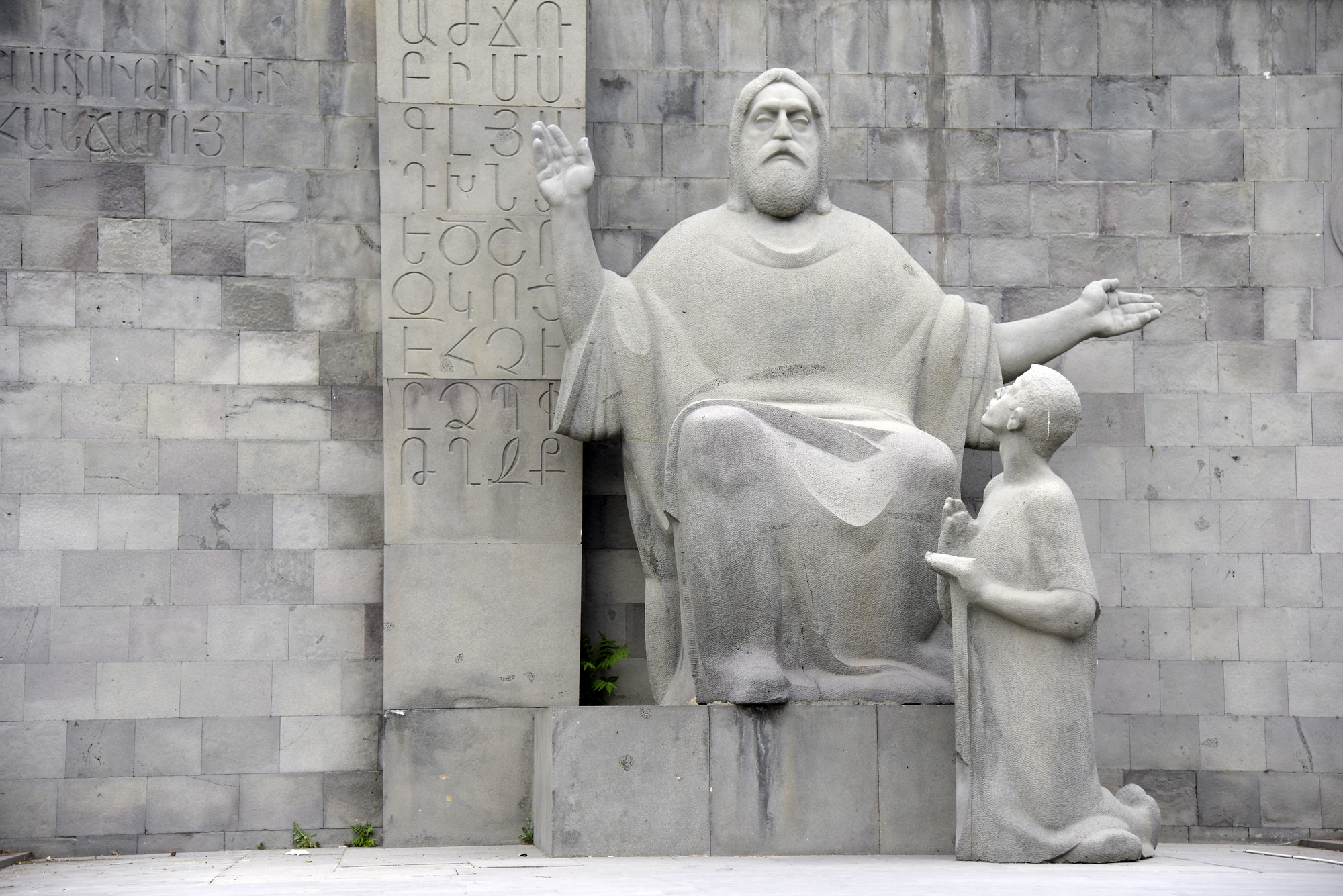
One of the most consequential acts in the history of the Armenian Church occurred in 405 AD, when the scholar-monk Mesrop Mashtots, with the support of Catholicos Sahak I and King Vramshapuh, created the Armenian alphabet — a unique script of 36 characters (later 38) designed specifically to translate the Bible into Armenian. The primary purpose was entirely ecclesiastical: to give the Armenian people the Scriptures and liturgy in their own tongue, without dependence on Greek or Syriac texts.

The result was extraordinary. The Bible was translated, patristic texts were rendered into Armenian, and an original Armenian Christian literature rapidly flourished. The period from the 5th to the 8th centuries is still called the Golden Age (Oskedar) of Armenian literature. The first sentence ever written in the Armenian alphabet, fittingly, was from the Book of Proverbs: "To know wisdom and instruction, to understand words of insight" (Proverbs 1:2).

1st century AD

Apostles Thaddaeus and Bartholomew evangelize Armenia; both martyred

287–301 AD

St. Gregory the Illuminator imprisoned in Khor Virap for ~13 years

301 AD

Armenia declares Christianity its state religion; first Christian nation in history

374 AD

Council of Ashtishat establishes canon law and church structure in Armenia

405 AD

Mesrop Mashtots creates the Armenian alphabet; Bible translated

451 AD

Battle of Avarayr: Armenians fight for the right to keep their faith against Persian Zoroastrian suppression

506 AD

Synod of Dvin: Armenia formally rejects Chalcedon; distinct Oriental Orthodox identity crystallized

1441 AD

Holy See re-established at Holy Etchmiadzin following centuries of movement

1915–1923

Armenian Genocide: the Church sustains the nation through catastrophic loss of approximately 1.5 million lives

1991

Armenian independence restored; Armenian Apostolic Church regains full public life in homeland


Chapter VI

The Battle of Avarayr: Faith Against Empire

If any single event encapsulates the Armenian relationship to their faith, it is the Battle of Avarayr, fought on May 26, 451 AD — the very year of the Council of Chalcedon. The Armenian nobility, under the command of Vartan Mamikonian, rose against the Sasanian Persian Empire's attempt to force Zoroastrianism on Armenia. They were vastly outnumbered and militarily defeated; Vartan and many of his commanders were killed.

Yet Avarayr is celebrated as a spiritual victory. The sheer determination of the Armenians to die rather than apostatize shook the Persian resolve, and within thirty years, the Treaty of Nvarsak (484 AD) granted Armenians full freedom of Christian worship. The historian Yeghishe, an eyewitness, wrote a celebrated account of the battle, and St. Vartan Mamikonian is venerated as a martyr-saint of the Armenian Church. The fifth-century declaration attributed to him — "Unrequired is a Christianity that is removed for the sake of one's life" — became the motto of Armenian Christian endurance.

Armenian Christology: Miaphysitism

The Armenian Church's non-acceptance of the Council of Chalcedon (451 AD) is not a rejection of Christ's full divinity and full humanity, but a difference in the theological language used to express it. The Armenian Church teaches Miaphysitism — the doctrine that after the Incarnation, Christ's divinity and humanity were united in one nature (mia physis), following the formula of St. Cyril of Alexandria: "one incarnate nature of the divine Word." This is distinct from Monophysitism (which denies Christ's humanity) and Nestorianism (which separates his two natures into two persons).

Modern ecumenical dialogue has significantly clarified this: the Joint Declaration of 1971 between the Armenian Apostolic Church and the Roman Catholic Church, and similar agreements with Eastern Orthodox and Protestant bodies, have affirmed that the ancient division was largely one of vocabulary rather than substance. Both sides confess the same Christ.


Chapter VII

Structure, Liturgy & Spiritual Life

The Catholicosate of All Armenians — Etchmiadzin

The supreme head of the Armenian Apostolic Church bears the title Catholicos of All Armenians (Katoghikos Amenayni Hayots). The Holy See of Etchmiadzin, located in the city of Vagharshapat (now renamed Etchmiadzin) in modern Armenia, is considered the spiritual center of the Armenian world. According to tradition, the site was designated by Christ himself in a vision given to St. Gregory — the name Etchmiadzin means "the Only-Begotten descended here."

The cathedral of Holy Etchmiadzin, built between 301 and 303 AD and repeatedly renovated over the centuries, is the oldest cathedral in the world — a UNESCO World Heritage Site. It houses precious relics including what are believed to be fragments of Noah's Ark and the Holy Lance (the spear used at the Crucifixion).

The Catholicosate of Cilicia

A second Catholicosate, the Catholicosate of the Great House of Cilicia, based in Antelias, Lebanon, emerged historically from the medieval Armenian Kingdom of Cilicia. It oversees Armenian Apostolic communities in the Middle East and parts of the diaspora. The two Catholicosates are in full communion and share the same faith and liturgical tradition, though jurisdictional questions have occasionally created tensions resolved through dialogue.

Two Patriarchates

The Armenian Church also includes the Armenian Patriarchate of Jerusalem — custodian of the Armenian Quarter in the Old City, one of the oldest Armenian communities in the world, centered on the Cathedral of St. James — and the Armenian Patriarchate of Constantinople, serving the Armenian community in Turkey.

The Divine Liturgy

The Armenian liturgy — the Badarak (Պատարագ) — is one of the most ancient and majestic in Christendom, with roots in the Syriac and Cappadocian rites and a continuous development since the 5th century. It is celebrated in Classical Armenian (Grabar), a liturgical language of extraordinary antiquity and beauty. The Badarak follows a complex structure of preparation, entrance, Scripture readings, homily, the Liturgy of the Faithful, consecration, and communion, saturated with ancient hymns (sharagans) composed by the great Armenian poets and theologians of the Golden Age.

The liturgical year of the Armenian Church is organized around the feasts of the Lord, with five major five-day celebrations called Khorhurd, and an extensive calendar of saints. The Sunday cycle is the backbone of Armenian spiritual life.

Sacred Art: The Khachkar

One of the most distinctive contributions of Armenian Christianity to world art is the khachkar (խաչքար, literally "cross-stone") — elaborately carved stone monuments combining a cross with intricate interlace, floral, and geometric patterns carved with extraordinary skill. Thousands of khachkars survive across Armenia, Nagorno-Karabakh, and the diaspora, each unique. UNESCO inscribed the art of khachkar craftsmanship on its Intangible Cultural Heritage list in 2010. Two particularly famous examples — the All-Saviour's Khachkar at Haghpat Monastery and the masterpiece by the sculptor Momik at Noravank — exemplify an art form inseparable from Armenian Christian piety.

🕍
Holy Etchmiadzin

World's oldest cathedral (301 AD); UNESCO World Heritage Site; seat of the Catholicos of All Armenians

📜
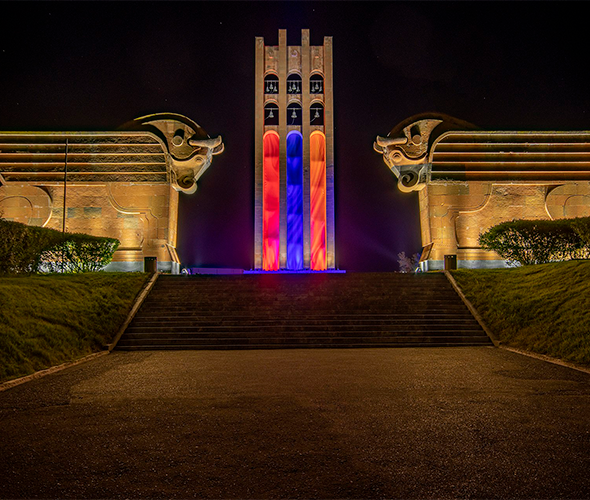
The Matenadaran

Yerevan repository of over 23,000 ancient Armenian manuscripts — one of the world's great manuscript archives

🏔
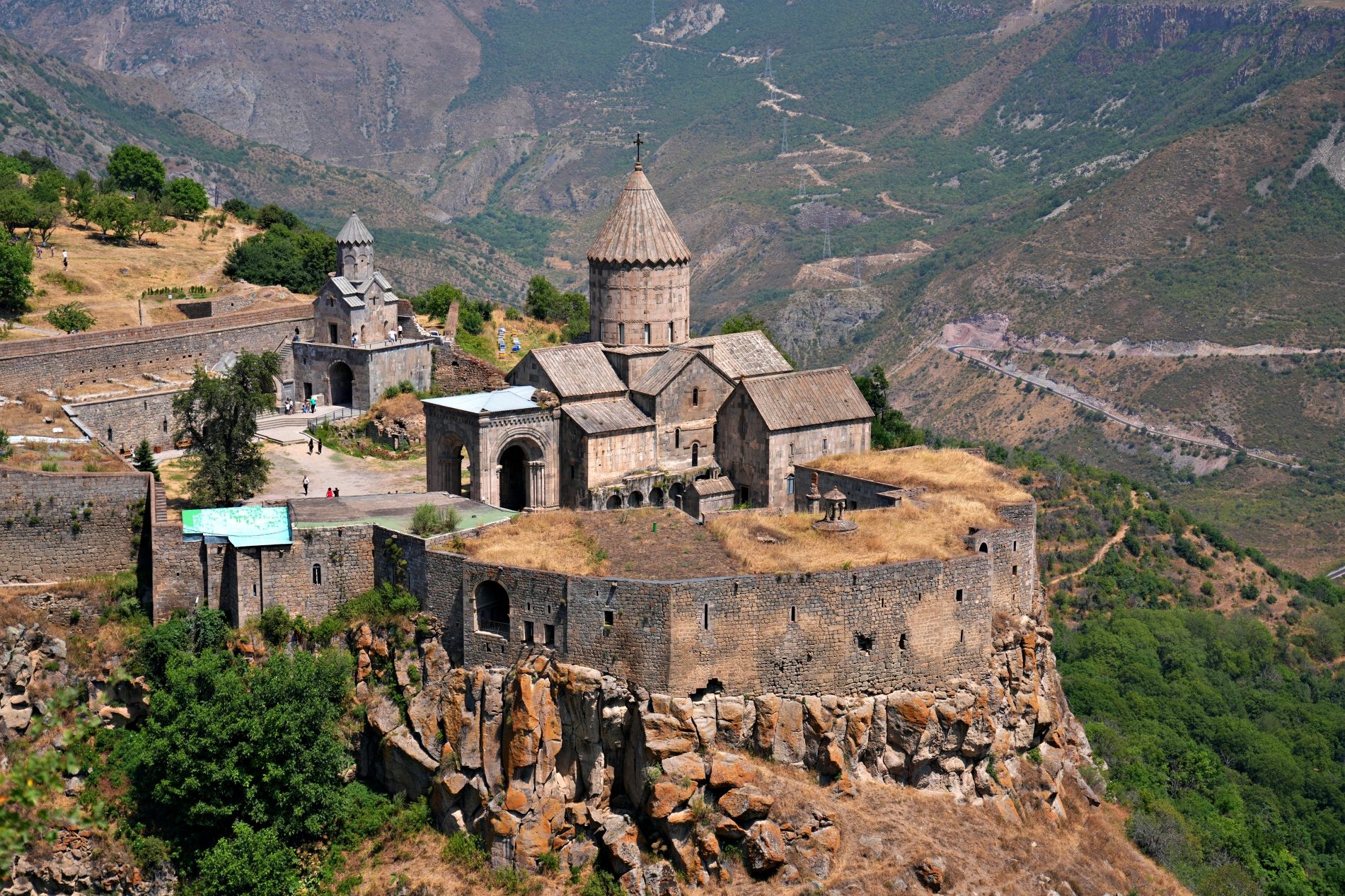
Khor Virap

The "Deep Pit" monastery near Mount Ararat where St. Gregory was imprisoned — one of Armenia's most sacred pilgrimage sites

The Khachkar

UNESCO-listed stone cross monuments; thousands survive, each intricately unique — icons of Armenian Christian identity


Chapter VIII

The Genocide, Diaspora & Endurance

The 20th century brought the Armenian people their darkest hour and their greatest test of faith. Beginning in 1915, the Ottoman government systematically deported and massacred the Armenian population of Anatolia — an event recognized by genocide scholars, the International Association of Genocide Researchers, and over 30 countries as the Armenian Genocide. Approximately 1 to 1.5 million Armenians perished through mass killings, death marches across the Syrian desert, starvation, and disease.

For the Armenian Apostolic Church, the Genocide was an assault on faith as much as on ethnicity: clergy were among the first targeted, churches were destroyed, and the community was shattered across the world. Yet the Church became the ark of survival — in Aleppo, Beirut, Paris, Los Angeles, Buenos Aires, and Sydney, Armenian priests and bishops gathered the scattered survivors and re-established communities centered on the liturgy, the calendar, the language, and the khachkar.

The memory of the Genocide is liturgically incorporated into the Armenian Church calendar. April 24 — the date of the mass arrests of Armenian intellectuals in Constantinople in 1915 — is observed as a national day of mourning, and the Church commemorates the holy martyrs (Nakhavarks) of the Genocide as blessed witnesses to the faith.

The Diaspora Church

Today, more Armenians live outside Armenia than within it. Communities of hundreds of thousands are found in Russia, France, the United States, Lebanon, Syria, Iran, Argentina, and Australia. The Armenian Apostolic Church in the diaspora maintains the full liturgical and theological life of the mother church, with dozens of eparchies (dioceses) and hundreds of parishes serving a global flock of approximately 9 million faithful.


Chapter IX

Christianity in the 21st Century

Christianity today is the world's most geographically widespread religion, with significant communities on every inhabited continent. Its center of gravity has decisively shifted: the historic heartlands of Europe and North America are experiencing dramatic numerical decline, while sub-Saharan Africa, Latin America, and parts of Asia are seeing explosive growth. Pew Research Center projects that by 2050, Africa alone will be home to approximately 1.3 billion Christians.

2.4B Global Christians
~31% World Population
65% In Global South
45,000+ Denominations

Ecumenism and Dialogue

One of the most significant developments of the 20th century was the ecumenical movement — the effort to restore unity among divided Christians. The World Council of Churches, founded in Amsterdam in 1948, now brings together over 350 churches representing more than 580 million Christians. The Second Vatican Council (1962–1965) marked a revolutionary openness by the Catholic Church to ecumenism, religious liberty, and dialogue with other faiths. The Armenian Apostolic Church is an active member of the WCC and maintains bilateral dialogues with the Catholic Church, Eastern Orthodox churches, and numerous Protestant bodies.

Christianity and Human Dignity

Christian institutions operate the world's largest network of educational institutions, hospitals, and social welfare organizations. From the great medieval universities to modern clinics in rural Africa, the Christian conviction that every human being bears the image of God (imago Dei) has been a persistent driver of humanitarian work — however imperfectly realized in church history.

Challenges and Renewal

Christianity in the 21st century faces profound challenges: secularization in the West, persecution in parts of the Middle East and Asia, internal divisions over sexuality and gender, the legacy of historical abuses, and the need to engage credibly with science, pluralism, and a rapidly changing world. Yet renewal movements — from Charismatic Christianity to monastic communities like Taizé, from Liberation Theology to the new monasticism — testify to the resilience of a faith that has repeatedly found new forms of life in every century.


Chapter X

Further Reading & Verified Resources

For those wishing to deepen their understanding of Christianity and the Armenian Apostolic Church, the following resources represent authoritative starting points across academic, ecclesiastical, and devotional perspectives.

Scripture & Theology

Armenian Church & History

Suggested Books

📕
The Orthodox Church

Kallistos Ware — essential introduction to Eastern and Oriental Orthodoxy

📗
Christianity: A History

Diarmaid MacCulloch — magisterial 1,000-page narrative of the full Christian story

📘
The Armenian Church

Malachia Ormanian — authoritative classic by a former Armenian Patriarch of Constantinople

📙
The Rise of Christianity

Rodney Stark — sociological analysis of Christianity's explosive early growth